Jeff is a high school teacher of United States History. He has 11 years experience teaching. He is passionate about his content area and his students. Jeff has evolved with regards to his teaching which is evident in his practice. Over the years he has transitioned his approach to include more universally designed instruction and critical thinking exercises. Recently he has collaborated both within his discipline and across disciplines in order to improve approaches for developing student writing. He has recognized through his own reflective practice that his students struggle developing a thesis and defending their claims through evidence. Jeff is eager for the upcoming school year to be able to invest time in self-study and collaboration with peers to explore practices that will contribute to his growth in this area as a teacher. He is hopeful that his development will result in improved student outcomes.
Jeff's supervisor has a shared process of reflection and discovery. Through the observation of classes, review of student work, and her own research she has recognized a deficit among students in this area. During lesson planning meetings, post observation conferences, and informal conversations, she has provided Jeff with advice and resources to aid in his development. She has also facilitated dialogue and provided time and space among Jeff's peers that has allowed him to share and discuss his observations and motivation for action. As a result of these actions, peers within the department have made connections to the experience Jeff has articulated and demonstrated an interest in exploring this topic. Recognizing the organically developed motivation to shift instruction among department members and a teacher on the team who has demonstrated effectiveness in this practice, Jeff's supervisor establishes a professional development learning lab centered around this topic. The teachers who subscribe to this lab will meet at various times throughout the year to discuss practices, share experiences, critically reflect on outcomes, and share student work. For the remainder of the available professional development time the teachers will self-select their activities and actions in order to grow and develop in their identified area of practice.
The district administration has recognized the overcrowding of initiatives and one-size fits all approach to teacher professional development. They have decided to weed their professional development program of top down common initiatives. They have reformed their professional development under a new program titled Go Time. Go Time provides time, space, and resources for teachers like to Jeff to explore areas of professional development that they self-determine to be relevant and aligned to their needs. This new model recognizes the varied learning styles and needs of teachers are differentiated. It is also empathetic to the constraints placed on teachers through the breadth of initiatives and directives that overcrowd their ability to sustain actions and practices that contribute to their growth and development.
Education has become fascinated with common initiatives. Since the roll out of the common core we have seen a shift towards common assessments, standardized lessons, common planning time, and whole group professional development initiatives. At the forefront of this shift is the idea that research based practices can be generalized and cloned. It is the implementation of these common initiatives that will provide a consistent, research based, instructional program for all students.
Lacking in this understanding is the belief that teachers are professionals. Individuals capable of critically reflecting, adapting to their classroom context, and challenging their own beliefs and assumptions about students, instruction, and learning. The "common directive" serves to motivate teachers to action utilizing an extrinsic pressure in order to conform to the expectations of the organization.
The Go Time model of professional learning is in direct contrast to the common directive. It is rooted in motivational theory and recognizes that there is not a linear relationship between professional learning and student outcomes. Instead, it recognizes that a third dimension must be introduced in order to ensure sustained growth and development. Teacher motivation must be developed and sustained in order to progress teacher learning and impact student outcomes. Self determination theory (Deci & Ryan, 2000) argue that motivation is dependent upon autonomy, competency and relatedness. The authors argue, "people whose motivation is self-authored compared to those whose motivation is externally controlled have more interest, excitement and confidence. This will manifest in enhanced performance, persistence and creativity" p.69. Therefore, when thinking about the origin of motivation, consideration for the level of autonomy and self-efficacy that individuals perceive or experience is of importance. In considering relatedness, the authors position motivation by extrinsic sources as a variable that may direct motivation. They argue, when extrinsic motivators are fully assimilated to the self will they be perceived as autonomous. The self-directed model of professional learning provides participants with an opportunity to develop efficacy and autonomy in the process and activities while assimilating those needs to meet the expectations of professional learning directed by the school or district. This integration of extrinsic and intrinsic motivation is a process that happens over time and allows for sustained growth, development, or action.
Ryan, R. M., & Deci, E. L. (2000). Self-Determination Theory and the Facilitation of Intrinsic Motivation, Social Development, and Well-Being. American Psychologist, 55(1), 68–78. https://doi.org/10.1037/0003-066X.55.1.68
Friday, April 26, 2019


Monday, June 5, 2017
A Time of Year for Reflecting and Planning
The end of the school year has quickly come upon us. It is a hectic time of year filled with standardized assessments, summative exams, capstone projects and of course many field trips. For most teachers it is a time to provide a self reflection and meet with an administrator for a summative evaluation meeting. It is also a time to present evidence and a reflection of your professional growth goals for the year.
Depending upon your district and administrative requirements this process of reflection may require structured responses to guiding questions, mountains of evidence and a scripted dialogue in a conference. While this method provides a significant amount of content to fill up a summative evaluation it can easily become a task without a great deal of true engagement.
I would prefer to see a more personalized approach for educators. Allowing for a true reflection of the year with an emphasis on "what would I truly like to improve on or learn more about next year?". The idea of pursuing an intrinsic passion is not new. We have had professional learning goals for years. However, the delivery and the process seemed to make it "another thing I have to do for my district". We have repackaged this idea by creating new vocabulary such as "Genius Hour" or "Mastery Minutes". The idea being that you are mandated a block of time to pursue a true passion or interest that will assist in developing you as an educator.
While the idea and packaging have evolved the concept remains the same. In order to maintain "engagement" it requires personal passion. What worked for you this year? What do you see evolving within your classroom, school, the greater educational community and the world? Is there something that requires exploration, collaboration and reflection? Make that your professional development goal for next year!
Wednesday, February 22, 2017
Targeting Growth Over Outcome In High School
The race to achievement and college career readiness has invoked a paradigm shift in the high school experience. With an expectation that all students will further their education at the college level we have seen not just an impact on curriculum standards, standardized assessment, and rigor, but also change in mindset and decision making.
The amount of students applying to and attending universities has risen across the U.S. The introduction of the common application has simplified the application process. The end result is students applying to a significant number of schools and those corresponding schools breaking their own records each year regarding the number of applicants. The schools invite this increase as it increases their selectivity which improves their perceived status. For example, it was just released that UCLA received just over 100,000 applications this year for a freshman class that is expected to be 6,500. With a 6.5% acceptance rate, one could conclude that a tremendous number of fully qualified applicants are denied. This new pattern has turned the college admittance process into more of a lottery. The reality of this is that a student who enters high school with a specific university as their goal and one who devotes all of their decisions to meeting that schools expectations has the greatest risk of minimizing what high school can be.
There has been countless research and discussion about the value of finding the right "fit" and the correlation of success and what you extract from your college experience. This data contrasts the opinion that the most selective school will guarantee you the best possible outcome.
The shift in mindset experienced by students is a focus on developing a transcript that reflects high level of rigor and grade point average. With this comes a great deal of anxiety as students sometimes sacrifice physical and psychological wellness in order to remain competitive.This new path limits the greatest experiences that build a foundation for life long learning. That being, experiencing and overcoming failure or setbacks, taking risks, exploring courses outside of your comfort zone or that are of high interest. The extrinsic motivation created by this escalating race clouds perceptions as the goal to achieve can be viewed as intrinsic motivation when in fact is an outcome of the encapsulating competition. In the end, students shift their focus entirely to achievement at the expense of true learning.
My wish is to work to evolve this mindset to a new focus. Rather than focus solely on a specific outcome, I would encourage students to look at growth. Understanding strengths and limitations and making a goal to improve them incrementally. A high school student who finds the right mix of challenge, rigor, and intrinsic interest and who works to grow incrementally in each area will develop the attributes that have a greater opportunity for continued success. The ability to understand mistakes, failure and setbacks and your ability to improve on them as a valuable learning experience would be the greatest skill to graduate from high school with. The understanding that you have four years to appropriately challenge yourself and grow. Staying committed to follow your passions and interests and not be victim to "this is what I have to do" is invaluable. In the end, you can find yourself as a senior who did your best, properly challenged yourself, and expanded your interests. At that point you can then apply to a university that fits who you have become and what you bring to them instead of you trying to be what you think they want.
Monday, February 6, 2017
Promoting Collaborative Inquiry To Improve Intrinsic Motivation in Teaching
The Common Core standards were introduced in 2010. While there are varying views on the quality and expectations of the standards, this new framework offered a much needed benefit. It provided a common language across our country that answered the question: What do we want our kids to learn? This common framework gave a point of reference for all teachers and was a significant shift from the isolation of individual state standards.
My experience at the secondary level of education consistently identifies areas of isolation among teachers. The common standards have provided a uniform curriculum and a set of standardized assessments to measure student mastery of these standards. However, the instructional strategies, assessments and grading formula's utilized by teachers in many cases remain autonomous. Autonomy, flexibility and creativity are important attributes for educators. It is what enables an intrinsic motivation to thrive in the classroom. The ability to innovate and deviate provides opportunity for differentiation, personalizing and individualization of instruction. However, this sometimes results in inconsistency, burn out and a miss alignment of grades and mastery. It is my belief that a more balanced approach of autonomy and consistency will provide the right mix to ensure an effective learning institution.
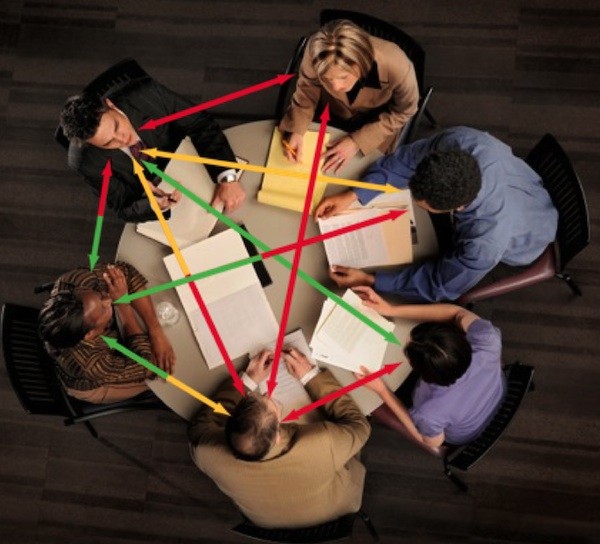
When segmenting instructional practices into its menu of ingredients a closer look at the student experience in similar courses is necessary. When two teachers of the exact same content area are provided a significant level of autonomy without any required alignment deviation occurs. Weighting of assignments as a function of final grade, inflation of grades and a false representation of student mastery are all possible outcomes. If the experiences in one class over another are significantly different it demands a system of assessment that can determine the effectiveness of each decision.
When planning an effective secondary program a focus on teacher collaboration must occur. Whether through virtual or physical means an investment of such will support a directive of collaboration. Teachers working together can share their best practices, align experiences and develop common assessments to align their progress towards standards mastery. It is my belief that effective collaborative teams may invigorate the love of teaching as much as autonomy. The collective thought provides teachers with a deviation from isolation. The sharing of materials and ideas can dramatically decrease workload as well as develop teachers depth of instructional practices.
My experience at the secondary level of education consistently identifies areas of isolation among teachers. The common standards have provided a uniform curriculum and a set of standardized assessments to measure student mastery of these standards. However, the instructional strategies, assessments and grading formula's utilized by teachers in many cases remain autonomous. Autonomy, flexibility and creativity are important attributes for educators. It is what enables an intrinsic motivation to thrive in the classroom. The ability to innovate and deviate provides opportunity for differentiation, personalizing and individualization of instruction. However, this sometimes results in inconsistency, burn out and a miss alignment of grades and mastery. It is my belief that a more balanced approach of autonomy and consistency will provide the right mix to ensure an effective learning institution.
When segmenting instructional practices into its menu of ingredients a closer look at the student experience in similar courses is necessary. When two teachers of the exact same content area are provided a significant level of autonomy without any required alignment deviation occurs. Weighting of assignments as a function of final grade, inflation of grades and a false representation of student mastery are all possible outcomes. If the experiences in one class over another are significantly different it demands a system of assessment that can determine the effectiveness of each decision.
When planning an effective secondary program a focus on teacher collaboration must occur. Whether through virtual or physical means an investment of such will support a directive of collaboration. Teachers working together can share their best practices, align experiences and develop common assessments to align their progress towards standards mastery. It is my belief that effective collaborative teams may invigorate the love of teaching as much as autonomy. The collective thought provides teachers with a deviation from isolation. The sharing of materials and ideas can dramatically decrease workload as well as develop teachers depth of instructional practices.
Wednesday, September 14, 2016
A Balanced Approach to High Tech Instruction
What has become a number of years ago now, I made a career change into teaching. At that time technology was beginning to make its presence in schools with an expectation of high growth use. We saw the introduction of computer labs and the "computer special" in elementary schools. Middle and high schools introduced computer classes and electives. The instruction consisted of Microsoft Office training and the widespread use of educational software. The outcome was teaching technology tools in isolation of content and software as a supplement.
Fast forward ahead a few years and we found the shift from the computer lab to the classroom. Advancements in wifi, lower cost mobile devices, presentation platforms and cloud-based applications provided opportunities for the technology to move from the lab to the desk. Professional development focused on introducing teachers and students to the tools. Teachers were expected to attend workshops or self direct their own learning towards to mastery of tools.
The evolution continues. Ubiquitous access to technology and general acceptance of the disruptive innovation that technology brings to teaching and learning has shifted the focus from "I am using tool x to how can I individualize, personalize and differentiate instruction in ways I could not before. In what ways can we develop the skills that allow students to be creators of content and knowledge rather than passive consumers.
As technology initiatives evolve a focus on asynchronous learning, publishing, collaborating, creating and connecting will provide our students with future proof skills, differentiated learning and an excitement connected to their perceived control over there growth.
As we embrace this change and explore the opportunities that are presented with technology it is just as important to recognize that a balanced approach to instruction is best. Recognizing the appropriate mix of instructional strategies including independence and self-directed learning is the new demand on educators. The most successful will be able to identify when and with whom to employ such strategies.
Monday, June 20, 2016
The Social Network Approach to School Community
Technology has created disruption in Education. Districts
have channeled resources towards supporting and expanding infrastructure. Our
professional development and pedagogical approach to instruction has grown to
expect a significant infusion of technology. To date, we have access to a vast
variety of cloud-based applications that allow for the creation, presentation,
and collaboration of content.
Professional development has also evolved from “check out these cool web
2.0 tools” to“ how to create a personalized and relevant, curriculum with technology”.
The implementation of various technologies and the increase
of curriculum demands was a quick moving tornado of change. Our students are
connected, collaborating, creating and sharing. They are developing a digital
footprint that represents their academic growth. The integration of technology based
assessment has simplified data driven decision making and a feedback chain that
has never been as effective. Teachers are exploring new web-based tools and
integrating them into their content areas. We have seen a decline in textbook
adoption and an increase in online, curated content. Students seamlessly shift
between applications creating opportunities for the representation and
assessment of knowledge that has never been so diverse.
During this era of disruption our students have evolved. As
educators we struggle with addressing students need for constant connectivity,
the management and interpretation of mass information, the desire for immediacy
and an overall increase in stress and anxiety connected to our shift in
education expectations. Our reaction to a global economy and workforce has
fueled an increase in computer based assessment, increased rigor, and demand
for competitive college placement. In
many cases, school has become much more difficult to manage.
Today’s students have to balance high expectations, a
breadth technologies and increasing demands for time. Keeping track of “what to
do” and developing personal efficiencies are vital for their success. Today,
Students may find themselves with eight classes and eight different online
resources for managing content and communication for those classes. For
students at-risk, the ability for mentors, advisors, and parents to assist may
be overbearing. Consider the significant
segment of classified students with ADHD.
How do students with executive function weakness manage the technologies
and resources that are peppered by teachers, administrators or coaches?
In order to harness the plethora of digital content, the
need for on-demand access, and communication & collaboration, districts may
consider a learning management system (LMS).
A learning management system provides a central repository for course
content and assignments. It provides a starting point for all blended
classrooms to curate the information necessary for their courses. While
teachers may ask students to use web 2.0 technologies to create content, the
learning management system is where they are delivered their assignments and
any supporting documentation.
In Chatham High School we were faced with an increased
breadth of technology adoption. As more and more teacher’s embraced digital
content and creation options for students we found that segments of our student
body were struggling to stay organized. For example, a single grade 9 student
may have one teacher that posted all assignments on a Google Calendar, one who
utilized a website, another who emailed information to a student group and
others who shared a Google Document. For
students classified and non-classified who demonstrate weakness in executive
function the challenge was amplified.
Our focus shifted to providing a single platform to function
as the hub for our course content. In looking for a platform our vision was a
web-based application that would provide students and teachers with
course/content management, calendaring and collaboration options. A single platform to curate course
information would simplify professional development and teacher collaboration
by providing a common language for teachers and administrators.
Our implementation of a learning management system proved to
be a success. We settled on an LMS that syncs with our student information
system. The end result is pre-populated courses and student rosters. A student
has access to all of their 6-8 courses in a single location. Our teachers post
documents, video and website links, threaded discussions, and assessments.
Teachers can post and collect assignments and even sync them directly with a
popular plagiarism software suite without leaving the LMS. Events and
assignments are automatically loaded to a class calendar. Students have the
option of viewing individual course calendars or a single calendar that lists
the events for all of their classes in a single location. This has proven to be
the most significant change agent in that students, parents, counselors, case
managers and advisors have a single location to know what assignments needs to
be done and when. Most LMS providers offer mobile apps that offer immediacy and
mobility for keeping up with changes.
There have been a number of unexpected advantages to
creating this virtual network in our school. We have utilized the groups
feature for all of our student clubs and activities. News, announcements and
events are shared through these groups and published on the student’s calendar.
Our faculty has taken advantage of these groups by creating collaborative
spaces to share ideas, success stories and their questions. One of our more
popular groups is the CHS Faculty Shelfie Wednesday, were faculty members share
book recommendations. The CHS Think Tank is a group of teachers who meet
physically and virtually to share innovative instructional practices across
content areas. The Chatham Library for Information and Collaboration (CLIC)
shares tutorials and how-to-guides for a plethora of web 2.0 applications and
district software applications. Our
departments have created groups to copy and share course materials,
assessments, primary sources and other valuable instructional materials.
Instruction in CHS has transformed by providing a blended
experience with 24/7 access to course content.
Students have around the clock access to course materials. Teachers
provide access to supplemental materials for remediation or deeper exploration
into topics. Faculty members have begun to develop their own web-based
textbooks by organizing content in unit folders in their courses. In some
departments we are exploring the development of virtual only courses. This
shift has started a conversation about flexibility in seat time and a typical
school day structure. As the available features of the LMS evolve we continue
to explore our options for deeper integration.
Tuesday, February 16, 2016
Shifting from Recall to Discussion Requires Teacher and Student Training
Discussion and questioning are two of the most targeted areas of classroom observation and evaluation. The focus has resulted in modified classroom configurations ("u" shaped seating) , varied seating options (table vs. chairs), technology infusion (online discussion forums), and professional development regarding instructional strategies that promote collaboration (think-pair-share, turn and talk).
At the heart of a collaborative classroom is the formulation of "good questions". The format of the questions dictate the result. There is a very defined purpose for asking recall or recitation questions. It provides teachers and students an opportunity to check for understanding. In my experience, this is the most prevalent form of formative assessment used in schools today. The use of technology ( student response apps) and various other instructional strategies (exit tickets, answer cards) provides teachers with data that encapsulates the entire class instead of an answer from a single student.

There is ample research to suggest that when students engage in active discussion regarding a topic they develop a more thorough understanding. The engagement in discussion provides students the opportunity to reflect, make connections, validate their knowledge and receive alternative perspectives from their peers.
Shifting from recall to discussion requires planning, preparation, scaffolding and reflecting. To be blunt, it requires training for teachers and students. Teachers and curriculum supervisors work collaboratively to develop "good questions". A good question allows students to form opinions, provide supporting evidence, make a personal connection, present their ideas and respond to feedback from their peers. When in development, teachers consider and anticipate student responses and adjust their questions to accommodate them.
The above mentioned does not come naturally. It must be modeled and reinforced. How have you provided students the classroom "norms" for effective discussion? Are students aware of the expectations for effective discussion. Have you posted them in your room?
Students need to be instructed on how to dissect a question and participate effectively in a group discussion. How do you dissect the question and establish your personal connection and need for clarification? How do you create "mental space" for peers to formulate responses and contribute to the group? How do you ensure everyone shares their connections and is an active participant in the group? What roles can you assign to group members to ensure a productive exchange? Is it necessary to provide a graphic organizer or outline to guide students progress? How will the ideas of a group be shared with the whole?
There are a variety of resources and publications that assist teachers in the development of effective discussions and productive group work. My goal with this post is to spark a self reflection regarding your own classroom. How effective is your classroom discussion and should it be an area to further explore?
At the heart of a collaborative classroom is the formulation of "good questions". The format of the questions dictate the result. There is a very defined purpose for asking recall or recitation questions. It provides teachers and students an opportunity to check for understanding. In my experience, this is the most prevalent form of formative assessment used in schools today. The use of technology ( student response apps) and various other instructional strategies (exit tickets, answer cards) provides teachers with data that encapsulates the entire class instead of an answer from a single student.

There is ample research to suggest that when students engage in active discussion regarding a topic they develop a more thorough understanding. The engagement in discussion provides students the opportunity to reflect, make connections, validate their knowledge and receive alternative perspectives from their peers.
Shifting from recall to discussion requires planning, preparation, scaffolding and reflecting. To be blunt, it requires training for teachers and students. Teachers and curriculum supervisors work collaboratively to develop "good questions". A good question allows students to form opinions, provide supporting evidence, make a personal connection, present their ideas and respond to feedback from their peers. When in development, teachers consider and anticipate student responses and adjust their questions to accommodate them.
The above mentioned does not come naturally. It must be modeled and reinforced. How have you provided students the classroom "norms" for effective discussion? Are students aware of the expectations for effective discussion. Have you posted them in your room?
Students need to be instructed on how to dissect a question and participate effectively in a group discussion. How do you dissect the question and establish your personal connection and need for clarification? How do you create "mental space" for peers to formulate responses and contribute to the group? How do you ensure everyone shares their connections and is an active participant in the group? What roles can you assign to group members to ensure a productive exchange? Is it necessary to provide a graphic organizer or outline to guide students progress? How will the ideas of a group be shared with the whole?
There are a variety of resources and publications that assist teachers in the development of effective discussions and productive group work. My goal with this post is to spark a self reflection regarding your own classroom. How effective is your classroom discussion and should it be an area to further explore?
Tuesday, October 13, 2015
What's for homework? Be ready for a question.
The use, value, and effectiveness of homework has been a long debated topic. Homework serves a number of purposes. What becomes a point of contention is the difference in opinion regarding the purpose. The primary rationale for homework tends to lean towards practicing what has been introduced in class or reading content to prepare for the next day's lesson.
The use of homework as a method to check for understanding or assess student understanding is not effective. How students complete their homework can vary with the availability of tutors or crowd sourced answers. Even the standard process of homework review is flawed. I have observed countless classes in which the opening of the lesson goes like this, "Take out your homework. Does anyone have any questions or problem with any of the questions?" This then transitions to a whole class lesson in which a few problems are reviewed based on a choral response to the teacher's question.

Proponents of the flipped classroom have turned the table on this approach by having students view recorded lectures or read instructional content for homework. When the students return to class they are provided opportunities to apply what they learned. The instructor facilitates this application of knowledge, checking in on students, and providing small group instruction when necessary.
I believe their is value in homework for those who need it. I propose making homework optional. A better approach for teachers to ensure understanding is to begin class with a question. A skillfully designed question or question set that provides the instructor with immediate feedback regarding student understanding. The results of which may guide the lesson towards moving forward or reviewing the previous topic. This type of assessment must provide aggregate and individual data. Using fingers or ABCD cards is a low tech option to a posed question. Class clickers, cell phones or learning management systems provide high tech solutions that can quickly aggregate results.
By implementing formative assessment at the start of the end of a lesson we can move away from "who does not understand?", and transition to "let's take another look at ......, it seems to be challenging"
The use of homework as a method to check for understanding or assess student understanding is not effective. How students complete their homework can vary with the availability of tutors or crowd sourced answers. Even the standard process of homework review is flawed. I have observed countless classes in which the opening of the lesson goes like this, "Take out your homework. Does anyone have any questions or problem with any of the questions?" This then transitions to a whole class lesson in which a few problems are reviewed based on a choral response to the teacher's question.

Proponents of the flipped classroom have turned the table on this approach by having students view recorded lectures or read instructional content for homework. When the students return to class they are provided opportunities to apply what they learned. The instructor facilitates this application of knowledge, checking in on students, and providing small group instruction when necessary.
I believe their is value in homework for those who need it. I propose making homework optional. A better approach for teachers to ensure understanding is to begin class with a question. A skillfully designed question or question set that provides the instructor with immediate feedback regarding student understanding. The results of which may guide the lesson towards moving forward or reviewing the previous topic. This type of assessment must provide aggregate and individual data. Using fingers or ABCD cards is a low tech option to a posed question. Class clickers, cell phones or learning management systems provide high tech solutions that can quickly aggregate results.
By implementing formative assessment at the start of the end of a lesson we can move away from "who does not understand?", and transition to "let's take another look at ......, it seems to be challenging"
Monday, September 28, 2015
Remember these elements when planning your lessons
The newly issued ASCD publication The Motivated Brain, by Gayle Gregory and Martha Kaufeldt reminded me of a few simple yet frequently overlooked lesson planning components. When we design lessons structure and consistency will ensure that we have designed a lesson with the potential of success.
My experience as an elementary and now high school educator provided the opportunity to see two different types of classrooms. Typically there are classrooms that are organized and those that are not. Establishing routines, norms and expectations allows for not only the efficient use of time, but it simplifies collaboration, communication and individualized learning. Provide students with an expectation of what to do as soon as they enter a class with a "do now" or other assigned task. Consider reviewing the procedures for group work or what is expected when students complete an assigned task. The research cited in The Motivated Brian points to lower stress and a more comfortable classroom environment in classrooms with this type of forethought.
Another essential component that is frequently minimized is the establishment of learning objectives and agenda of activities. By publishing your objectives, essential questions, and planned activities in advance you provide a road map for the students. This provides students an opportunity to self assess their progress towards meeting the objective and manage time and resources as the tasks progress. For your next lesson, write the objectives on the board and display an agenda of activites.
Providing students with opportunities to collaborate with peers is an essential lesson component that will impact classroom cultures. This type of collaboration such as turn and talk or larger scale group work provide students the opportunity to learn from each other, communicate ideas and feel comfortable needing clarification.
An interesting take away from the text is the focus on movement. Research has proven that individuals who are active increase blood flow which impacts mood, motivation and stress reduction. Making a point to incorporate movement into your class can have a profound effect. A simple change in structure like having students stand and discuss with a peer may result in more engaged class and fruitful dialogue.
Monday, July 20, 2015
Should intelligence be measured by what we know or the questions we ask?
In our current education system we label, group, and track students based on academic achievement that is primarily measured by assessment. GPA, standardized test scores, honor roll, gifted and talented programs, and course level recommendation are determined by a students grades. High stakes testing whether standardized or local summative assessment have encouraged a culture of "what do I need to know to do well" While the measurement of content knowledge and skills in order to determine achievement is a requirement of education, we must also make room for inquiry and failure.
Merrian Webster defines intelligence as
" a (1) : the ability to learn or understand or to deal with new or trying situations : reason; also : the skilled use of reason (2) : the ability to apply knowledge to manipulate one's environment or to think abstractly as measured by objective criteria (as tests)"
In an article published in the June edition of District Administration (2015), Warren Berger stated " The art of inquiry is the foundation of advancements in science, medicine, mathematics and more. Questioning "what is" often leads to discovery of "what could be"." In an era of academic competitiveness, high stakes testing and a demand for elite education we must not only provide opportunities for students to demonstrate mastery. We need to develop the skill to formulate great questions. We need to create classroom cultures that nurture this skill.
In the era of Google and mobile devices we can locate tremendous amounts of information. How do we connect the information that we acquire in order to develop intelligence? Are we developing our ability to ask great questions that will act like a catalyst for connecting information?
How do you integrate questioning into your classroom? Do you provide a culture and an environment in your classroom where kids are not only provided opportunities to question, but are comfortable asking? How do we create lessons that shift from "let me tell you what you need to know", to students asking questions as a result of your facilitation of learning that leads to required knowledge? Do you create a classroom environment where students challenge or contest a response, build on each other's responses, and take risks offering opinions or ideas? Do you provide all of the questions or are students expected to create questions?
For example, in a traditional classroom setting students may be provided a text and asked to answer a few questions regarding it. They may even be asked to respond to a discussion thread in an online environment in which the teacher posses the topics? Can we consider a reverse approach by asking students to read the text and develop a few of their own questions? Can we use technology to provide a collaborative approach to this process?
This is an area that am looking to further explore. In future posts I hope to share and discuss cooperative grouping strategies, inquiry approaches to instruction, and simple classrooms strategies that may contribute a classroom culture of questioning.
Tuesday, June 16, 2015
Transition your classroom from a "walled garden" to a global contributor
In the 21st Century citizenship has changed. We are operating in a globally connected world. Communication, collaboration and information is open, shared and ubiquitous. The evolution of the web has lowered the barriers of entry for individuals to create, collaborate and contribute.
Our classrooms must reflect this trend and prepare our students to be global citizens. In many instances our classrooms have not changed much in many years. Yes, we have introduced and integrated technology. Students type instead of write, take online quizzes, create presentations, view videos and contribute to class discussion boards. Teachers recognize the power and flexibility of technology and provide students options for demonstrating knowledge by providing choice with regards to the technology resources they use. Technologies have provided innovative ways for teachers to provide feedback, students to collaborate, and parents to monitor progress. Paradigm shifts in instructional practices have resulted in flipped or blended learning, personalized instruction, and virtual courses.
The shifts in instructional practices as a result of access to technology has been profound. What still remains in place in many classrooms is the audience. Teachers and students create, share, revise, and consume for each other. Our "voice" is contained to our brick and mortar or virtual classrooms. Our audience, while authentic, is not representative of our globally connected world.
In order to prepare students to be active contributors to our connected world we must provide students the opportunity to have a voice. Digital authoring opportunities in which students publish their work for a global audience should be an expected outcome. Having students publish their writing on an online portfolio, contributing comments on a blog, publishing lab results to an online community, engaging in discussions with content experts, inviting professionals and content experts into the classroom through video conferencing, or publishing an online publication should be part of our day to day. Making connections to provide authentic experiences should be part of our routine.
Sites like Open Source Teaching is an example of a resource that provides a connection to individuals who are experts in their fields. Blogger, Wordpress of Kids blog provide an opportunity for students or classes to publish their thoughts, opinions, research or other class work. Social networking sites provide opportunities to make connections and share ideas. How can you integrate student publishing and sharing into your courses?
Tuesday, April 28, 2015
Homework...One of the things that makes you go hmmmmmmm
Homework has always been a part of the instructional program of schools. The argument for and against homework has been widely debated, researched, and published. Is homework necessary to apply or practice what has been taught, or to prepare for what is expected to ensue during your next class meeting? How much is enough? Should it be required? Should we grade homework? Should we differentiate it?
Most parents and students will agree that homework is plentiful and time consuming. Many will also agree that there is inconsistencies among educators regarding how it is used, assessed, and applied to the instructional program. While variation may be a result of the curriculum of the course, it may be this variation that impacts the perceived value. The conversation of homework among educators varies and evolves. The most common justification for homework typically involves the need to check for understanding, provide opportunities to apply what has been learned, and compensate for limited instructional time in the classroom compared to the curriculum pacing requirements. On the surface these are valid and honest. One would assume that this rationale would result in a perceived value regarding the necessity of homework as we know it. However, it may not..
A hot topic in the evolution of homework is the "flipped classroom". This idea flips the process by having students review content through reading or viewing video segments for homework. In class the students apply what was learned through application under the oversight of their teacher and collaboration with their peers. This process allows a level of individualization and collaboration. It creates a paradigm shift in the classroom by having the teacher facilitate the application of skills, strategies, and content with less of a focus on whole class, direct instruction.
The conversation regarding homework has also focused on its role in measuring student achievement. In the era of high stakes testing and the mathematical measurement of achievement through standardized testing we have found ourselves creating a culture of students who focus on achievement through grades at the expense of deeper understanding. The dialogue regarding grading of homework varies. Educators approach this in varying ways by grading homework for completion, accuracy, or both. Others have aborted the need to grade homework and have made it optional for students. The reflective feedback among educators and researchers has raised the question of its relevancy as a measurement of student learning vs. student effort. Should effort be a percentage of student grades in which the grade represents student achievement?
There are bodies of research that insists learning requires the opportunity to take chances and make mistakes. Learning is ignited through reflection, receiving feedback, and making corrections. Should homework provide students the opportunity to make mistakes without a punitive consequence? Would that opportunity increase the perceived value with students? Would teachers observe similar or greater growth by increasing feedback and decreasing grading? Can we maintain the effectiveness of homework with a decrease in extrinsic motivators and would this approach increase intrinsic motivation? This topic requires further discussion and reflection. I invite your thoughts in the comments.
Friday, December 19, 2014
Start With Changing the Mindset
Merrian-Webster dictionary defines learning as, " the activity or process of gaining knowledge or skill by studying, practicing, being taught, or experiencing something" When we practice something we are identifying skills that we wish to improve on. We then apply repetition, reflection and instruction to improve in a particular area. The act of doing something over and over must be paired with instruction and adjustment in order to result in a change in behavior, action or understanding.
Athletes are not born professional. It takes countless hours of instruction, practice and adjustment. It is the instruction paired with practice that will most likely equate to growth. Albert Einstein defined insanity as the act of doing the same thing over and over again and expecting the same result. For this reason, we must embrace failure and not hesitate to change direction or seek instruction.
In our classrooms we need to cultivate a culture that takes risks, embraces misunderstanding, seeks instruction and can adjust. Only when our students can embrace that the first step in learning is not knowing can we move toward growth. How we provide an environment that encourages kids to participate, not be afraid to be wrong and recognize the strategies that can be employed to transition from not knowing to knowing?
I recently read Carol Dweck's book Mindset. The idea of a Fixed vs. Growth Mindset and it's influence on the classroom struck a chord with me. Our educational system provides variables that make it easy for students to develop a fixed mindset. Leveled classes, honor rolls, GPA's, and standardized testing establish labels and groupings that present students with a fixed interpretation of their ability.
The research presented by Dweck shows us that our brains are malleable. Our intelligence is not fixed, but can grow. Dr. Dweck presents a number of strategies that can be employed to develop the growth mindset. This mindset must be embraced by both students and teachers.
When working with our most at-risk students it is my belief that a counseling approach in which we can reroute the belief that their intelligence level is fixed is vital. As demonstrated by our most successful athletes, scholars, and entertainers it is a commitment to practice, recognition of weaknesses and perseverance that resulted in their development. As Malcolm Gladwell has proposed it takes 10,000 hours of emersion in your craft to produce an Outlier. I encourage educators to explore this idea and integrate its principles into their instructional practices .
Thursday, November 20, 2014
Assessing Student Understanding With RAFT Writing
The translation of knowledge, opinion and understanding into a written response can be a challenge for a number of students. Teachers across content areas often discuss the challenge of not only improving the quality of student writing, but also having it be a reflection of what students know. The typical protocols for developing written voice involve a variety of strategies and resources including pre and post writing strategies. Graphic organizers, journaling, conferencing, word webbing and collaborative authoring and review through online documents are just a few of the strategies employed. Typically students are presented with a prompt and asked to formulate a written response that includes supporting evidence. The guiding words used in such prompts are typically who, what, when, where, why and how. 
RAFT writing takes a more holistic approach to the process, but segments the objective into four components that students can easily understand. It also provides an authentic and engaging connection to the content.
- Role of the Writer: Who are you as the writer? A movie star? The President? A plant?
- Audience: To whom are you writing? A senator? Yourself? A company?
- Format: In what format are you writing? A diary entry? A newspaper? A love letter?
- Topic: What are you writing about?
* Read Write Think - http://www.readwritethink.org/professional-development/strategy-guides/using-raft-writing-strategy-30625.html
Image - https://blogger.googleusercontent.com/img/b/R29vZ2xl/AVvXsEjpjOER7B6ZkeNXbc6m69_n8857iJSs-L6PW1KruyMtNZdjDfOVkFT_p__XGKBk8dZ6cvQuV5_vd1OGbWcnOCBAroZxl4s9IwuwccBE-DhrXQ9k4ApWJN5NDv7cYRNOz4c709ikpZcr6Hs/s640/RAFT+Graphic+Organizer.png
The flexibility, choice and alternative formats offered with this strategy offer differentiation and authenticity to the task at hand. The final product presents a higher order understanding of the content presented.
I recently observed a U.S. history course in which the students were being introduced the the viewpoints of the Federalists and the Anti-Federalists with regards to the ratification of the Constitution. A simplified explanation of the objective was for students to understand the supportive and opposing views of establishing and investing in "big government"
The RAFT writing strategy may be applied to this lesson in a variety of formats:
- Role - A concerned citizen
- Audience - State Senator
- Format - Letter
- Topic - Your concern regarding the proposal to unite all of the schools in Morris County, NJ into a single school district.
- Role - George Washington
- Audience - Self
- Format - Diary Entry
- Topic - The opposition to the ratification of the constitution
The infusion of a RAFT writing task may be utilized to introduce a topic or as a formative or summative assessment. There are a variety of resources available including online random generators. I have curated many of them within the Wiki linked below.
Tuesday, October 21, 2014
Quick Writes - An Underutlized Instructional Strategy
During a recent classroom observation I observed the use of a quick write strategy. While this is not new or something I have not used myself I reflected on its value. A quick write strategy is simple by design, but powerful in many ways. A teacher poses a high quality question to the class and asks students to jot down their thoughts regarding the question. After providing some time the teacher asks students to share their thoughts.

The quick write strategy offers the following advantages in the classroom:
- All students in the class are provided the opportunity to reflect on the question and organize a response.
- Students who are slower processors are provided time to formulate a response before sharing with the class.
- Teachers may use this strategy as a formative assessment by circulating the room to view what students have written.
- Students may use this as a self-assessment by analyzing what they wrote in comparison to what other students in the class share.
- A quick write might be assigned as a "do now" in order for students to activate prior knowledge or as a closure activity to reflect on a lesson.
The quick write instructional strategy provides an opportunity for everyone in the class to have a voice and reflect on the content. It levels the playing field and ensures active participation and engagement.
Monday, September 15, 2014
What will I see when I search?
Last week I had the opportunity to present to a creative writing class in our high school. Being in the role of assistant principal it's not often that I have the opportunity to teach a mini lesson. I was asked to introduce students to the idea of creating a digital portfolio in which they will publish the various formats of writing that they will be crafting in this class. The teacher and I developed a template using Google Sites for students to work with as they develop their portfolios.
While this opportunity could have been a simple tutorial in which I demonstrated the "technical intricacies" of Google Sites, I was compelled to pair this with a discussion on online reputation management and the power of publishing.
In the era of social media, smartphones, and mobile apps the ability to publish online is not only accessible, but enticing. Sharing online is the most common form on communication among students.
Over the years we have educated students about the danger of online publishing. Our message has been about protecting your identify and minimizing the availability of personal information. We have also spoke about the dangers of anonymity. The talk of 'being safe' expanded to reputation management. Students have been exposed to conversations regarding their digital footprint. We have focused on the permanency of what we share online and the outcomes that may be a result of these actions.
In speaking to this class of students I asked how many of them have ever Googled themselves. I was surprised to see only about 10% of the students responded yes. When I asked them what they have learned about online publishing they were quick to cite the topics I discussed above. In my conversation with them I challenged the idea of protecting your identity online.
We discussed who may be looking for you online. Employers, college admissions officers, friends and family were discussed. My approach regarding this audience shifted their thinking from "be careful with what I share" to "what are you publishing online under your full name that adds value or differentiates yourself?" "How can you create a digital footprint that puts you at an advantage over others when applying for a job or seeking admission into a University.
When working with students we should be modeling best practice strategies in online publishing. Students should be sharing their best work, thoughts, ideas and creations for the world to discover. A Google search of your name should uncover the products that best represent you. Examples may be not only writing portfolios, but art work, images, or comments on publications.
As educators we should be working to develop the skills required to publish online. Authoring for the web requires an understanding of how we read online. The quality of the content must be paired with an appreciation and understanding of intuitive design and rich presentation.
Monday, August 4, 2014
Why do we grade everything?
The common core standards and the next generation science standards have provided a common framework that represents the skills and content knowledge that we expect students to master in order to be prepared for college and careers. The standards and correlated high stakes tests are designed to assess students on the application of these skills and content.
If we accept these standards as "what kids need to know and do" then we need to develop curriculum and assessment that scaffolds students toward this goal. How we get students their should be variable. The activities, technologies, lesson design and products should be representative of the dynamics of your class. Students should be given what they need based on observation, data and their feedback. While this represents the "art" of teaching, close consideration should be given to best-practice instructional strategies. It is at this stage that collaboration among teachers may result in improved instructional practice.
If the goal of our efforts is "student learning" vs. "teaching" we need to consider the opportunities we provide students and teachers to check for understanding and progress towards learning. Learning is defined as "the acquisition of knowledge or skills through experience, study, or by being taught" Research and experiences has proven that failure is an essential component to growth, development and learning. How can we provide opportunities for students to not fear failure in order to provide them a chance to take risks, recognize areas to focus improvement and channel resources? How can we provide teachers with a true understanding of where students are on the learning curve?
The use of formative assessments provide opportunities for this type of measurement. Whether its a do now, exit slip or a short quiz these types of "check for understanding" assessments are effective. If we eliminate the grading of these assessments we take away the punitive nature of these assessments. The assessments may now be on-demand and unannounced. There will not be grade inflation representative of study guides, tutoring or intensive review. The feedback is immediate, authentic and relevant.
When we provide formative reviews of student learning our instructional practices can align to what students need vs. what we have to 'cover'. The summative assessments, aligned to the standards can then represent a greater weighting of the overall grade and will result in a course grade that better reflects student understanding.
Wednesday, July 9, 2014
Teaching and Testing vs. Student Learning and Assessment
In a 2011 issue of Ed Weekly, Peter DeWitt published an article discussing how our focus on testing should be shifted to assessment. This idea of assessment, whether formative or summative, has been widely spoken and debated for quite some time. Our movement towards common core standards and PARCC assessment has forced our shift to summative testing. In other words, we are preparing students for end of course summative assessments that provide an "autopsy" of how well the students have mastered skills and content. By incorporating "Student Growth Percentage Scores (SGP's)" in teacher evaluations we are also assessing how well teachers have done in ensuring such mastery with a defined group of students. 
While there is value and relevance to summative assessments, our goal as educators is not to teach, it is to ensure student learning. In order to meet that demand we need to employ formative assessment to constantly check for understanding. The results of which will impact our pacing, lesson plans, follow-up assessments, interventions and support models.
In most schools teachers embark on this challenge in isolation. They develop tests, quizzes and other formative assessments on their own. Teachers calculate percentage scores, averages, and hopefully varied levels of itemization resulting in data analysis for their group of students.
The work of DuFour, DuFour and Eaker support a hybrid approach to formative assessment by introducing common formative assessment. The advantages of teachers teaching the same content developing common assessments are highlighted in their many works. It is important to note that they are speaking of assessments and not content tests. These assessments provide a variety of prompts, questions sets and tasks that assess the skills, critical thinking, problem solving and content connected to the standards. The results of each assessment are itemized and discussed collaboratively. Interventions, curriculum changes, and instructional planning are developed collaborative as a result of the data.
"If five teachers teaching the same course or grade level are responsible for ensuring all students acquire the same knowledge and skills, it make sense those teachers would work together to determine the best methods to assess student learning. A team of teachers could divide responsibilities for creating a unit and developing assessments. Teachers working in isolation replicate and duplicate effort. They work hard, but they do not work smart.", (DuFour, DuFour, Eaker, 2007). Other advantages cite equity, collaborative problem solving, improvement of individual and teams of teachers, systematic interventions and increased student achievement.
Teachers of the same content working together to develop 3 or 4 benchmark assessments, aligned to standards, presented timely, and analyzed and discussed collaboratively will undoubtedly have a greater opportunity to ensure student learning than high stakes, summative tests.
Friday, June 20, 2014
For This Generation.....Content is King
The digital shift over the past 15 years has created a unprecidented demand for content. The value of original and authentic content is evident in the current value of sports franchises, reality television, and app development. We live in a world of social media, on-demand digital access, and 24/7 connectivity. This type of network demands content.
With this new demand creates opportunity. Opportunity exists for our students to develop communication skills, literacy skills, and content knowledge that will allow them the opportunity to be contributors in the content era rather than passive consumers.
How do we provide our students with the skills necessary to be valuable "content contributors"? How do we prepare them to navigate, manage and authenticate the content available to them?
We start by exposure to multiple mediums across content areas. For example, a mathematics teacher considers a variety mediums for content delivery and assessment of knowledge such as direct instruction, video tutorials, case studies, or online discussions. Teachers may provide students with a repository of resources utilizing a learning management system.
When we provide students with opportunities to publish and share their thoughts, opinions and final products we begin their journey towards a contribution to global content. It is at this juncture that we should encourage them to publish and to accept and reflect on criticism, commenting and peer review. By developing both their confidence to share and refining their craft of writing and critical thinking we develop the next generation of "content creators".
Student publishing is accomplished in a variety of ways. The shift from writing for your teacher to writing for an audience may be stressful for some. Through exposure, positive support, and authentic feedback students may develop a comfort with sharing publicly.
Teachers may abandon paper based journals for blogs. Class discussions my transition between the classroom and threaded discussions. Student writing may be shared electronically for peer review. Teachers may connect their students with classrooms around the world or content area experts. These connections might involve collaborative blogging, collaborative authoring, peer view,online discussions, or video conferencing.
Having students comment on public blogs, newspapers or writing book reviews on Amazon present authentic opportunities to hone their craft as well.
Wednesday, May 7, 2014
Mobile Apps Promote Communication and Education
Mobile devices have increasingly found a home in schools. No cell phone policies have been amended or replaced with electronic device guidelines. Student and teacher cell phone use in schools has transitioned from "do not" to "do it this way" . Students and teachers have become creative with the use of these devices. The use of polling services to check for understanding, students taking pictures of information posted on the board, backchannel conversations, and on-demand research have caused a paradigm shift for students and staff. 
School administrators must recognize the opportunity to maximize this resource to promote communication, collaboration, and increased student achievement. By utilizing social media or the roll out of a school app, administrators have the ability to "push" information. The idea of posting information on a website for those who choose to visit the site can be replaced with a pushing out information through Tweets or app notifications.
Learning Management Systems offer a centralized repository of content, assignments, important dates and communication. Many of the most up-do-date LMS systems offer mobile apps that provide students and teachers with this repository in their pocket. The availability, accessibility and organization of these materials provides a classroom level intervention that will impact student achievement and home-school communication.
Subscribe to:
Posts (Atom)